





Choosing the Right CRM for Your Business
In today’s competitive market, building strong relationships with customers isn’t just a nice-to-have — it’s essential. A Customer Relationship Management (CRM) system can help you track interactions, understand customer needs, and streamline your sales and marketing efforts. But with so many options available, choosing the right CRM system can feel overwhelming.
Here’s a clear guide to help you make the best choice for your business.
1. Understand Your Business Needs
Before diving into product comparisons, take a step back and define what you actually need from a CRM system. Are you intending to:
• Track sales pipelines more efficiently?
• Improve customer service?
• Automate marketing campaigns?
• Analyse customer data for better decision-making?
By identifying your priorities, you’ll be able to filter out CRM systems that look flashy but don’t meet your core requirements.
2. Consider your Team and Workflow
A CRM system isn’t just a piece of software — it’s a tool that your entire team will use daily. You can also choose one that fits your current workflow rather than forcing your business to adapt to the system. Think about:
• Ease of use: Is the interface user-friendly?
• Training requirements: How quickly can your team get up to speed?
• Customisation: Can you adapt it to match your processes without expensive development work?
3. Decide between Cloud-Based and On-Premise
Most modern CRM systems are cloud-based, meaning they’re accessible from anywhere that has an internet connection. They also usually require a monthly subscription and offer easy updates. On-premise CRM systems, on the other hand, are installed on your own servers and give you full control over your data — however they come with higher upfront costs and ongoing maintenance responsibilities.
For most small to medium-sized businesses, a cloud-based CRM offers flexibility and scalability without the technical headaches.
4. Integration is Key
Your CRM system should work seamlessly with the tools that you already use. Common integrations include:
• Email platforms like Outlook or Gmail.
• Accounting software.
• Marketing automation tools.
• Customer support systems.
For example, Maximizer CRM integrates with popular platforms and allows you to keep all your customer data in one place, reducing time-wasted switching between systems.
5. Don’t overlook Mobile Access
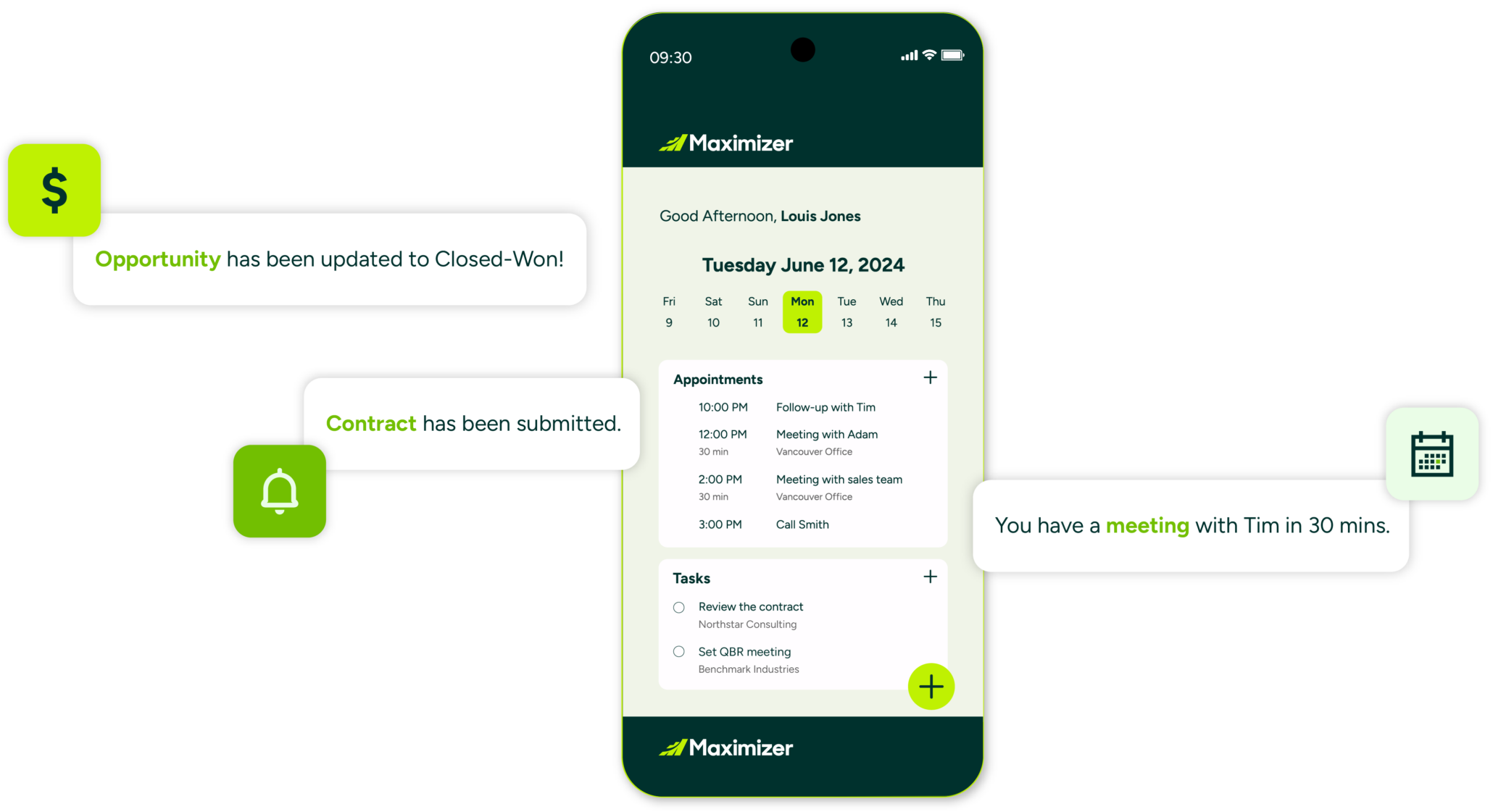
In today’s mobile-first world, sales and service teams need access to customer information on-the-go. A good CRM system should have a robust mobile app that offers most, if not all, of the desktop functionality. This ensures your team can update records, respond to customer queries, and close deals from anywhere.
6. Budget Wisely — But don’t go too Cheap
While the price is always a factor, choosing the cheapest option can cost you more eventually if it doesn’t meet your needs. Take a look at the total cost of ownership, including:
• Subscription fees or licence costs.
• Implementation and training.
• Add-ons or integrations.
• Future upgrades.
A slightly higher monthly cost can be worthwhile if it saves hours of admin work and improves customer satisfaction.
7. Take Advantage of Trials and Demos
Most CRM providers offer free trials or live demos. Use these opportunities to see how the system works with your real data and day-to-day processes. Also involve the people who will use it most and get their feedback before committing to it.
8. Think Long-Term
Your CRM system should be able to grow with your business. Consider how easily you can add more users, increase data storage or expand functionality as your needs evolve. Choosing a scalable solution from the start will save you the headache of migrating to a new system later.
The right CRM system can transform your customer relationships and improve efficiency across your business. Take the time to evaluate your needs, involve your team in the decision-making process and evaluate a few options before you buy. Whether you choose a versatile system like Maximizer CRM or another platform, the key is to find a tool that works for you, not the other way around.